Showing posts with label Brandon Rowley. Show all posts

Recap of 2010 Market Performance & ETF Tracking Error

Monday, January 03, 2011

Share
After a couple weeks off from posting through Christmas and the end of the year, I'm back to recap the year. Santa Claus showed up at the end of 2010 to add to the gains while the economic calendar and geopolitical environment presented no impactful news to derail the advance. The primary US index, the S&P 500, mounted a solid 13% advance for 2010 closing a volatile year that included a 17.1% correction from high to low mid-year. The last four months of the year alone offered a 19.85% return as fears of a double dip recession and a meltdown in Europe abated and stocks recouped the drawdown.

I have had many conversations recently about the advantages and disadvantages of ETFs so I thought it would be worthwhile not only to look back at last year's performance in various markets but to compare these markets to their primary respective ETFs. I am wholly convinced that ETFs are the best bet for the vast majority of investors who control their own accounts, easily topping individual stock-picking and mutual funds.


Market Benchmark
Symbol
ETF Benchmark
Performance
ETF
Performance
ETF Tracking
Error
Dow Jones$DJIDIA11.02%11.11%(0.09%)
S&P 500SPXSPY12.78%12.84%(0.06%)
Nasdaq 100NDXQQQQ19.22%19.04%0.18%
Russell 2000RUTIWM25.31%25.30%0.01%
Gold/GCGLD29.72%29.27%0.45%
Copper/HGJJC32.53%29.04%3.49%
Crude Oil/CLUSO15.17%(0.71%)15.88%
Natural Gas/NGUNG(21.18%)(40.58%)19.40%
US Dollar$DXYUUP1.42%(1.60%)3.02%
Data based on thinkorswim closing prices.

The equity market ETFs do an excellent job of tracking their benchmarks with the SPY and DIA actually outperforming marginally after fees during the year. As has been reported across the financial world, the commodity ETFs that trade in futures contracts, JJC, USO and UNG, have large tracking errors. These ETFs are crushed by the rollover costs associated with contango, a concept far too many retail investors do not understand. GLD, which holds the physical metal, must only pay storage costs. It is not surprising then to learn that a new ETF backed by the physical metal for copper will debut in 2011 but will carry a hefty storage fee of 1.5% as copper's equivalent weight to gold results in much larger volume.

I think copper and crude oil are best used as indicators for equity markets. The relevant ETFs are garbage and without a substantial education in futures trading, these markets are simply out-of-reach for most non-professionals. Equity ETFs, on the other hand, are excellent vehicles for achieving low-cost diversification. While investors may be giving up some of their opportunity to achieve alpha it is often best to accept beta and to just worry about the front-end of consistently depositing money into the account. Yet, the game is fun, that's for sure, and active investors can always put most money aside and play with the rest in search of alpha.

Overall, the economy is improving, companies are making more money and stocks are pushing higher. The elephant in the room is clearly the US jobs picture which will likely improve in 2011 as productivity growth slows and firms look to improve the top line by hiring. Here's to a prosperous 2011!


Brandon R. Rowley
"Chance favors the prepared mind."


*DISCLOSURE: No relevant position

Greatest Jeopardy! Champions vs. Watson the IBM Supercomputer

Thursday, December 16, 2010

Share
On February 14th-16th next year, Jeopardy! will hold a contest between an IBM supercomputer dubbed Watson and two of the show's greatest winners of all-time, Ken Jennings and Brad Rutter. This is the first man vs. machine contest in Jeopardy! history and after 4 years of development, Watson promises to showcase man's most sophisticated computer programming to date. This match comes 13 years after the world chess champion was successfully defeated by an IBM computer. Yet, "analyzing subtle meaning, irony, riddles, and other complexities" makes this challenge markedly more difficult than the game of chess.


IBM's Watson vs. Jennings & Rutter

Human #1: Ken Jennings: record-holder for most consecutive wins with 74 games, $2.5 million in total winnings

Human #2: Brad Rutter: record-holder for highest cumulative amount won, $3.255 million in total winnings

Machine: Watson: "the most ambitious foray into deep analytics and natural language processing"

The game of Jeopardy! is an ideal ground for competition against humans because it combines four key elements: 1) A large swath of topics and information, 2) the nuance of human language, 3) the need for rapid processing speed and, 4) a confidence measurement because of point deductions for incorrect answers.


Kasparov vs. Deep Blue

Remember man vs. machine in the chess world? The project of creating a computer to beat the greatest human chess player began with the 1989 match of Deep Thought vs. World Champion Garry Kasparov. Deep Thought was handily defeated. IBM went back to work and developed Deep Blue, a true competitor to Kasparov.

In February 1996, Deep Blue became the first computer to best the world' reigning world chess champion in the first match of a six-match series. But, Kasparov went on to win the next 3 out of 5 matches to win the series and humans were declared the winner.

Back once again to the drawing board, IBM programmers created the next version, nicknamed Deeper Blue, to take on Kasparov in February 1997. Even though Kasparov won the opening match, Deep Blue won the second to even it out. Then, incredibly, the next three games came to a draw. Deep Blue went on to win the sixth match and was declared the winner and the first computer to even defeat the current world champion chess player.

Kasparov accused IBM developers of cheating claiming the programmers must have intervened during the game, which was against the rules for they could only adjust the code between matches. IBM denied the allegations and refused Kasparov when he demanded a rematch. (Source)


Brandon R. Rowley
"Chance favors the prepared mind."

*DISCLOSURE: No relevant position

Facebook's 'Visualizing Friendships' Maps the World

Tuesday, December 14, 2010

Share
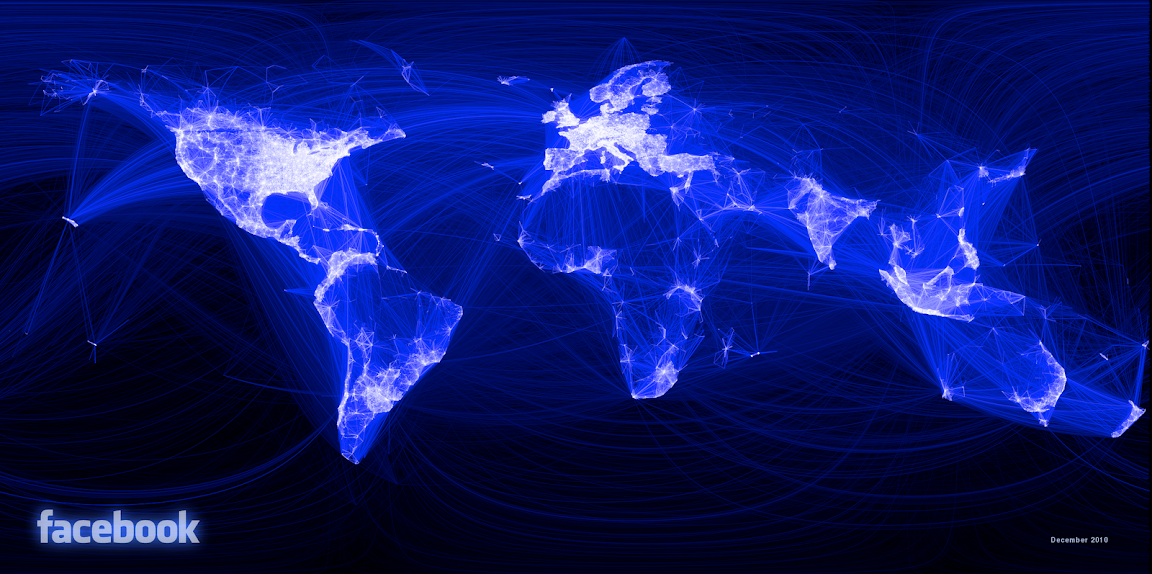
Paul Butler, an intern on Facebook's data infrastructure engineering team, put together a fascinating graphic titled "Visualizing Friendships". With a random sampling of 10 million Facebook users across the world, Butler plotted arcs between friends based on the longitude and latitude of each person.

What emerged from a black canvas background was a captivating replication of the world map. The most advanced technological countries and areas see their borders outlined very clearly while others are lost in the darkness.

Forget Where Stocks Were, The Question is 'Where Are They Going?'

Monday, December 13, 2010

Share
Were you just a spectator to the rally from the bear market lows?

The S&P 500 has rallied 86% off the March 9th intraday lows. The move has been a spectacular opportunity to make money in the stock market if you were smart enough and/or lucky enough to buy near the bottom. But now we come to today, what should an investor do? Does it matter that we've just rallied so much? Absolutely not! An investor cannot make money from past prices, he can only profit from the future.

Stock market investors need to think about the past like businesses look at past investments. Any investment a firm engaged in up until today must always be seen as a sunk cost. The capital has been poured in, it is gone and entirely irrelevant in future decision-making. The choice of which projects to pursue should be made with the goal of maximizing profitability down the road. This judgment is advanced irregardless of the possibly large amount of time and resources poured into previous projects. The downfall of many investors and firms is their commitment to past decisions and their inability to pivot into more profitable options. The rally over the last 21 months is a sunk opportunity cost and should be wholly ignored when making a investment decision today.

Just ignore the charts for now

My contention is that charting is at its best at tops and bottoms in markets, when the whole world is paying attention to price itself. The front pages and headlines ring out during these times informing everyone that prices are making new highs or new lows. Chartists thrive in these irrational environments because investors focus on past price, which is an inherently irrational act. Greed and the fear of missing out drives investors to buy stocks because they are pushing out to new highs and panic fuels selling because stocks are hitting new lows. These behaviors vault the chartist's strategy into favor for short time periods as the breakout and breakdown prophecies are self-fulfilled. In a circular sense, the chartist is the most rational during this time because his strategy is the only one that works as fundamentals and technical oscillators are thrown out the window. Yet, this cannot last for long.

Eventually the herd recogizes the silliness of making investment decisions based on just the price movement itself and slowly recovers its senses. The crowd once again begins to ignore the regular price fluctuations as they diminish in amplitude and rediscovers its confidence in the long-term growth of the economy and its firms, assuming that belief is substantiated. Simply, the rational investor does not care where prices have been, only where they're going. Once the wild emotions calm, prices will revert back to trading inline with long-term earnings expectations.

What does the future look like?

Jeff Miller over at A Dash of Insight penned an excellent post last week about market valuations in the Spring of 2009 compared with current levels. He argues that stocks are priced more attractively on a forward basis when considering the risks to estimates than they were in the late Spring of 2009. He sees the market garnering a higher multiple in 2011.

The S&P 500 in May 2009, a couple of months after the bear market lows were put in, was priced at 15.37 times forward earnings estimates. Yet, at today's prices, the market is priced 13.35 times forward expectations. This is counter to what we would anticipate given the pervasive uncertainty about the future felt in 2009 versus today. The market's fear was reflected in the VIX reading north of 30 at the bottom against the sub-20 range seen today. A more certain future should earn a higher multiple by investors.

There are plenty of possible world events out there to worry investors. What if the euro disintegrates? What if China's property bubble pops? What if California or Illinois defaults? What if terrorists blow up a nuclear facility? What if crazy Kim attacks South Korea? What if a meteor hits Earth? What if the sun blows up? There's always plenty to worry about in the world (and universe I guess), this will never change. But it's important to understand that we have just saved the financial system from flying off a cliff and we're in the mending process. The trend is up, the financial system has stabilized and companies are making more money. Forget that we're up 86% off the bottom, it's irrelevant. There may be plenty of money to be made going forward with the right outlook and some faith in the global growth story.


Brandon R. Rowley
"Chance favors the prepared mind."


*DISCLOSURE: No relevant position

Insights from High Frequency Trading World

Wednesday, December 08, 2010

Share
Sean Hendelman, CEO of T3Live, was featured on a panel at the High Frequency Trading World Conference in New York yesterday. Sean runs high frequency trading strategies at T3 Capital Management, a separate but affiliated company with T3Live. The event itself was the largest of HFT events that I've attended so far seemingly pointing to the increasing interest in the business and, in particular, the greater awareness of HFT following the May 6th flash crash event. There was even a panel with strictly institutional investors where the broad conclusion seemed to be: we have no idea what HFT is doing to us. I also met a venture capitalist at the event who is looking to break into the business by funding a shop or strategy. Market participants all across the spectrum are recognizing the prevalence and staying-power of HFT and looking to 'get in on the action'.

My takeaway from the event

If I had one key takeaway from the event it would be: computers are faster than humans traders. It is amazing how crystal clear this message has become as I listen to HFT practitioners speak about their businesses. As I have written in the past, the manual side of the business requires more sophistication than ever as HFT has come to dominate the efficiency-creating spectrum, an arena daytraders found profitable in the past. With HFT now driving fantastic efficiency in US equity markets in terms of short-term supply/demand pricing, profitability in scalp-style daytrading has diminished. As a general rule, traders continuing to find success have been expanding their timeframes to profit from inefficiencies over longer time periods. Below is my summary of Sean's panel, let us know what you think!

Volume and Latency Concerns: The Need for Speed

Moderator: John Cogman, VP, Autobahn Sales, Deutsche Bank Securities
Adam Afshar, President and CEO, Hyde Park Global Investments
Chris Bartlett, Director, Nobilis Capital
Sean Hendelman, Chief Executive Officer, Managing Partner, T3 Capital Management
Tim Cox, Director of Execution Services, New York, Bank of America - Merrill Lynch
Feargal O'Sullivan, Head of Trading Solutions, Americas, NYSE Technologies

The motives for latency reduction

The discussion started with participants giving their thoughts on the motives for latency reduction: why do you want to be the fastest and how important is latency? Sean took the lead stating that the lowest latency is a key component of his business and he strives to achieve the lowest possible latency for his strategies. The barriers to entry are quite high with costs that many cannot afford when getting started. Bartlett chimed in to say that latency is a product of the particular strategy employed. For a particular strategy, the relevant question is: can you get the fill you need? How that question is answered will drive your latency needs.

Afshar, CEO of Hyde Park Global, a 100% robotic trading firm based on artificial intelligence, went about re-defininig the goal of HFT. He explains that the purpose is to deal with the non-linearity of price data by splitting up data in chunks and small enough time sets whereby it can be modeled linearly. He believes the limitations for HFT will not be technology as it is falling in price over time, but rather strategies are becoming more intellectually complicated. The real challenge is finding the talent capable of creating profitable strategies.

Bartlett threw some numbers into the debate to define the HFT playing field. The ultralow latency is largely needed for capitalizing on fleeting arbitrage opportunities and typically lives in the 100-200 microsecond land. Normal HFT players, the likes of liquidity providers and rebate traders, are somewhere in the 500 microsecond in latency. The accuracy of these numbers can certainly be debated but for the average daytrader suffice it to say that it's far faster than even the human eye can see and interpret the Level II.

Afshar once again reiterated his belief that, in the end, it will simply be a matter of the smartest people winning the race. He used GETCO as an example, the largest electronic trading firm in the world. Founded by two guys in Chicago just over a decade ago in 1999, the firm quickly became a powerhouse in the liquidity provision space because they had the best ideas. While they're definitely major technology user, their business grew out of nothing to something because of programming ingenuity.

The keys to the technology itself

Sean took hold of the discussion centered around the technology angle and used O'Sullivan's clarifying remarks about the pyramid of HFT players. The top of the pyramid is a very small, select group that engages in ultra-high frequency trading while just below and lower are the vast majority of traders that do not strive to be the absolute fastest in the market. Sean argued that while technology costs may be falling over time, maintaining a place in the top of the pyramid continues to require substantial investment costs. The goal with designing a architectural system is to keep it light and flexible. Large institutions often struggle with dinosaur technology because changing one piece requires the updating of many other pieces. In order to remain adaptable, technology must be kept as light as possible. O'Sullivan added that not only does complexity drive the need for technology but also the efficiency of the code itself in executing the operations.

Regulatory impact on HFT operation

Afshar explained how he thinks about the goal of technology: reducing friction costs. He contended that lowering transaction costs and the time in which money is tied up are the key purposes of buying new technologies. Regulations, in effect, impose arbitrary friction costs on traders.

Sean jumped in to say that regulation isn't really a major problem at the current time. Most HFT firms are already going through the process of pre and post-trade checks through brokerages. The checks on the order side are extremely rapid and nothing to worry about. Yet, the quote side has significant room for improvement. As Bartlett added, there is just a ton of data to receive and interpret on the quote side slowing processing capabilities down.

Measuring latency

Some very intriguing discussions on measuring the latency ensued. Bartlett spoke about the ineffectiveness of using the Windows clock because it is only precise down to about 15 microseconds. If one uses the exchange timestamps, they're all different and simply don't match up because there's no universal clock that can be synched to efficiently.

Sean changed the discussion a bit and gave HFT participants the easiest way to measure latencies of various vendors and exchanges. Build two of the exact same strategies and run them simultaneously with the one variable being a particular vendor. Whichever strategy gets the print is the fastest, no more discussion needed.


Brandon R. Rowley
"Chance favors the prepared mind."

McDowell Bests Woods, Bernanke Explains Monetary Policy

Monday, December 06, 2010

Share
Tiger Woods Graeme McDowellGolf is fun to watch again

Tiger Woods is back...almost. For the first time in 2010, Tiger looked like the competitive, hungry player of the past. Granted, he was playing in the Chevron World Challenge, an 18-player event sponsored by the Tiger Woods Foundation and not an official PGA tournament, but he looked good. He took Graeme McDowell to a play-off after letting his 4-shot lead to start the day disintegrate by missing a couple key putts early. McDowell eventually bested Woods showing iron resolve by sinking two long putts on the 18th green to finish the round and on the playoff hole.

Woods' struggles this year are clearly the result of the incredible psychological damage he did to himself. Yet, his psyche seems near repaired after a year of wreckage in his personal life. He has also spent the year working on a new swing which looks to be coming together nicely. The results are a fitting end to each player's season with it being Tiger's worst year and McDowell's best as professionals. McDowell climbed 32 spots in the world ranking, from 39th to 7th, while Woods slipped from 1st to 2nd as Lee Westwood nabbed #1. I think the event sets the stage for a much brighter 2011 for Woods and I loved feeling the thrill of a dead-heat finish to a tournament that only Tiger is able to create.

Strong week after Monday reversal

The S&P climbed 3% last week with futures trading at new highs for the year pre-market on Friday prior to the release of the dismal jobs report. Monday's significant reversal off the lows of November's pullback set the stage for the massive buying that stepped in on Wednesday and Thursday. The reaction to Friday's jobs number can really only be perceived as bullish as equity buyers used the weakness to snatch up shares.

It's tough to spin a report of 39,000 jobs added when economists expected 150,000 and private payroll increases only came in at 50,000 versus 158,000 expected. Even the unemployment rate ticked up from 9.6% to 9.8%. There just really wasn't anything positive in this report.

Yet, stocks reversed and closed strong with the excuse seeming to be that QE2 makes for a heads-we-win, tails-we-win scenario. I think though that the market is staying somewhat optimistic as companies continue to increase profits. Adding 39,000 isn't great; in fact, it doesn't even meet the ~110,000 needed to compensate for new workers entering the labor market, but it is still job growth. The recovery is a slow slog but we're still adding jobs, we're still growing, we're still on the right track, modest as it may currently be.

Bernanke explains they're not practicing witchcraft, it's just monetary policy

Ben Bernanke appeared on 60 Minutes last night in his second public interview to explain the FOMC's viewpoint and actions. Bernanke did a great job laying out the mandates of the Federal Reserve and quelling some of the fears surrounding their policy initiatives. Bernanke made the case that with unemployment at ~9.5% much of the year and inflationary pressures very modest, the correct course is to ease monetary conditions further. He points out that the risk of non-action could be far greater. Bernanke also tries to put to rest the warnings of inflation from many pundits by arguing that the Fed has a diverse set of tools to deal with inflationary pressures if and when they crop up. Importantly, he stresses that his policy are not fiscal in nature, they do not add to the national debt.

The FOMC's mandate is to balance the goals of full employment and stable prices. When unemployment is high and inflation is very tame, really the only choice the Fed has is to pursue expansionary policy. The Fed has a long history of fighting inflation and should be able to rein it in if inflation rises above their 2% target. For now, the slack in the system will inhibit producers from passing through costs of rising commodity prices driven by global demand. I applaud Bernanke for his appearance and would like to see more reasoned and rational discussion on the benefits and risks of monetary policy. There is simply far too much hyperbole when it comes to discussing the subject.


Brandon R. Rowley
"Chance favors the prepared mind."

*DISCLOSURE: No relevant position.

Google's (GOOG) Android Flourishing

Friday, December 03, 2010

Share
Android logoThe latest data from comScore was released today on the mobile phone market and shows Google's (GOOG) Android platform flourishing, rapidly gobbling up market share from competitors.

Smartphone ownership overall jumped 14% for the three months ended October 2010 over the previous three-month period with now fully 25% of cell phone users owning a smartphone. While Research In Motion (RIMM) still dominates the market with 35.8% of the market, its share is continuing to erode as Apple (AAPL) and Google (GOOG) steal would-be customers. Microsoft (MSFT) and Palm (HPQ) round out the lowest shares of the market.

Google's (GOOG) Android platform has been well-received by customers with the Android now accounting for almost a quarter of the smartphone market, up an impressive 6.5% over the previous three month period. The Android's initial release was in October 2008, just over two years ago, but the free and open source software was quickly seen as the best choice for many OEMs including Samsung, LG, HTC and others. The momentum is clearly in Google's favor at this point in time.

Smartphone Platform Market Share
Platform
July 2010
October 2010
Point Change
RIM
39.3%
35.8%
-3.5
Apple
23.8%
24.6%
0.8
Google
17.0%
23.5%
6.5
Microsoft
11.8%
9.7%
-2.1
Palm
4.9%
3.9%
-1.0


Previous posts on Google (GOOG):

Google (GOOG) a Value Play ~ September 17, 2010


Brandon R. Rowley
"Chance favors the prepared mind."

*DISCLOSURE: Long AAPL.

Doctor Copper (JJC) Challenging All-Time Highs

Friday, December 03, 2010

Share
Doctor Copper is one of the best indicators of global growth given its ubiquitous use in products we make all over the world. Copper has the characteristics of malleability and ductility while being one of the most efficient conductors of heat and electricity locking in its spot as a commodity with broad usages. From wiring and circuits to fittings and pipings, copper is useful in a wide variety of products (and let's not forget the Statue of Liberty!).

With emerging economies exploding as the global credit crisis abates, demand for commodities is likewise rising aggressively. This demand has pushed prices back to all-time highs seen in 2006 and re-challenged in mid-2007. The $4.00 level in high grade copper looks likely to be broken in the near future as copper prices charge higher.

I have found Doctor Copper to be a quality leading indicator for stock prices and see it as unquestioningly bullish at the present time. A quick use of Nexalogic's handy correlation tool shows the correlation between the S&P 500 (SPY) and copper (JJC) at a whopping 0.73 for the year 2010. Compare this to the oft-cited explanatory power of the US dollar (UUP) at a -0.36 correlation. In sum, copper continues to lead the way challenging all-time highs; should previous correlations hold up, the stock market is likely to follow it higher.


Previous posts on copper:

Trust this Rally ~ September 1, 2010

Thoughts on the "Bond Bubble", Equity Sentiment & Doctor Copper ~ August 28, 2010


Brandon R. Rowley
"Chance favors the prepared mind."

*DISCLOSURE: Nothing relevant.

Differentiating Between Trending vs. Mean Reverting Data

Thursday, December 02, 2010

Share
Derek Hernquist had a great post out a few weeks back titled "How I Use Mean Reversion" in which he discussed the stark difference between two types of data: trending and mean reverting. While these ideas are not rocket science, it is crucial for success in markets to understand how these two types of data differ.

What are mean reverting data?

Hernquist points out some typical mean reverting data: sentiment, valuation, profit margins, asset class popularity. I like to view many of these in terms of a swinging pendulum. Sentiment, in particular, swings back and forth between extremes around a static mean. Over long horizons humans really don't change. We are greedy at times and fearful at others and these sentiment changes will effect valuations on assets.

Financial excess has never been and will never be stopped. Some level of government intervention is helpful in muting the extremes, but regulation cannot fix this eternal cycle. Financial markets will always find a way expand to irrational levels and contract to similarly irrational levels. Humans, given a recency effect, tend to believe good times will continue forever, likewise bad times.

In the same vein profit margins drive asset class popularity. Yet profit margins will mean revert over time. Economic competition keeps industries in line with each other. High margins induce new firms to enter and squeeze margins while low margins incent firms to exit.

Hernquist's best observation from his post is that "there is a general tendency for news flow to continue in one direction, but an oscillating pattern in how market participants respond to that news flow." We see this everyday in the stock market and turning points can often be foreseen by gauging reaction to headlines. When prices stop declining on bad news, often a turn is afoot.

What is trending data?

Examples of trending data are highlighted as: sales, earnings, government spending, stock prices. While I think it could be argued in the very long term, sales and earnings data for individual companies do exhibit some form of mean reversion due to the competition factor I discussed above, trending does occur at least on a 5 year horizon, plenty of time for investors and traders. In the case of the market or economy as a whole, the data are most certainly trending in nature.

If you have any faith in human innovation and ingenuity, you'll recognize that stock prices will not fall in perpetuity at any point. Stock prices, for all their volatility and randomness, follow earnings over the long-term and tend to rise as economies expand and humans create value to sell to each other. The chart of the Dow Jones Industrial Average for the last century tells the story better than anything else can.


Does this mean anything for the active trader?

In my view, shorting is a useful strategy during anomalous times like the Panic of 2008 and for very select companies about which you know a great deal. The market, though, is built to go higher. Very simply, we drop failing companies from the index. Economically, companies go bankrupt. Removing failures from an index and replacing them with growing firms helps push prices higher. There's just no reason to believe in lower prices over the long-term.

When looking at individual companies, it's important to see that momentum and trends tend to persist. Shorting flying stocks is often a losing, and almost more importantly, extremely frustrating game played in vain. Innovative companies expanding their sales and earnings can have dramatic rises in price and not be in a bubble or nearing some impending collapse. The persistent shorts in names like Apple (AAPL), Netflix (NFLX), Salesforce.com (CRM) or Baidu (BIDU) fail to recognize the trending nature of earnings and stock prices. Quick trades, scalps and the like are always possible in any moving price but often sticking with trends will be the most successful strategy in the long run.

It all comes back to the old statement: don't fight the trend. Stock prices trend along with the sales of companies and there's just no reason to doubt it. As I talked about yesterday, we are in a recovery with growing GDP and corporate profits and these are trending data. Separate this data from mean reverting indicators and the trend will become clearer and easier to stick with.


Brandon R. Rowley
"Chance favors the prepared mind."


*DISCLOSURE: Long AAPL.

Christmas Time: Light the Tree, Buy Stocks

Wednesday, December 01, 2010

Share
Rockefeller Christmas TreeI'm back in New York and back at my desk after a nice, long Thanksgiving break. The market is on speed today with the Dow up 250 points right now after Monday's big intraday reversal marked a significant change in the action. It seems to me that stocks are primed for a Christmas rally to tack onto this year's mild 8% gain in the S&P so far. November was a healthy 4.4% pullback and buyers are back to start December. Overall I'm not all that concerned with the market itself but am focusing on individual companies as I wrote in mid-November.

Is the rally justified?

One of my favorite bloggers, Wade Slome over at Investing Caffeine, has a great post out titled "Another Year, Another Decade" highlighting the prominent undercurrents driving the market:
  • GDP Growth: You wouldn’t know it, but we have experienced five consecutive quarters of GDP (Gross Domestic Product) growth with a recently upwardly revised Q3-2010 growth figure to +2.5% (from previous +2.0% estimate).
  • Job Growth: Although the unemployment rate has stubbornly remained in the 9.6% range, the country has created more than 1million jobs over the last year, thanks to ten consecutive months of private job creation. We’ll find out more about hiring trends this Friday.
  • Record Profits: S&P 500 profits are on track to exceed the $88 peak profit earned by the index in 2006 (Thomson). Corporations may not be hiring in droves, but the cash is piling up for increased investment and pent-up hiring. Unprofitable companies generally do not hire.
  • Changing of the Guard: Regardless of political leanings, with Presidential re-elections only two years away and Republicans gaining control of the House, some common ground between the Right and the Left could be found. Specifically, gridlock is the default, but there is genuine potential for compromise on taxes, fiscal restraint, tax relief, and investment incentives with the aim of sparking job creation.
  • Holiday Cheer: Holiday sales got off to a good start judging by “Black Friday” (the day after Thanksgiving) and “Cyber Monday” – the day after Thanksgiving weekend. Sales on Cyber Monday rose +19.4% versus last year, according to Coremetrics. Traffic to retail stores and websites over Black Friday weekend increased by +9%, reportedthe National Retail Federation.
I think there's a lot to be optimistic about, especially as a trader/investor. With common sentiment seemingly still so negative, opportunities abound for those willing to believe in the recovery and find values. I've excluded the list of negatives here because there will always be negatives but the underlying currents remain very strong indeed.


Brandon R. Rowley
"Chance favors the prepared mind."

*DISCLOSURE: Nothing relevant.

Intuitive Surgical (ISRG) Growth at a Reasonable Price

Wednesday, December 01, 2010

Share
A great investing model that attempts to combine the best of the growth and value worlds is the GARP model, or growth at a reasonable price. This strategy seeks to find companies growing at above market rates yet selling with moderate price tags. Often these stocks are previous momentum crowd favorites but have been rejected because of some overhang or disappointment along the road that caused the weak holders to dump shares and move on. Intuitive Surgical, Inc. (ISRG) may be a great fit for this investing model.

What is Intuitive Surgical?

Intuitive Surgical is a leading medical technology company designing and manufacturing cutting-edge, minimally invasive robotic surgery equipment. In surgery, the name of the game is precision and using the same skills learned in open surgery, doctors can now control the instruments like never before. The da Vinci Surgical Systems offer doctors enhanced visualization with 10x high definition magnification coupled with robotic arms that provide greatly improved dexterity and precision. Intuitive Surgical's robotic systems have revolutionized minimally invasive surgeries (MIS) advancing the quality in FDA-cleared general, cardiac, thoracic, urologic, gynecologic and pediatric operations. The expanding use of minimally invasive surgery benefits patients with faster recoveries, lesser chances of complications, lower blood loss and lower pain infliction.

The company generates revenues through the initial capital sales of the da Vinci Surgical Systems as well as the recurring sales of instruments and accessories along with annual service contracts. They hold over 290 US patents and 300 foreign patents for the da Vinci system. At the end of the third quarter 2010, the company had an installed base of 1,661 da Vinci systems with 1,228 in the US, 292 in Europe and 141 in the rest of the world.

ISRG boasts a pristine balance sheet and moderate valuation

Intuitive Surgical has a minor $76.2 million in long-term liabilities against $1.6 billion in cash, equivalents and available for sale investments. With a 73% gross profit margin, the third quarter's $86.6 million in net income represented a 34% increase year-over-year. The company is a cash cow with high quality earnings generating $404 million in operating cash flow for the $260.6 million in net income for the nine months ended September 30, 2010.

A surface look at the P/E of ISRG may intimidate some given its 31x valuation but the company has a long-term record of sustained growth. For the last five years, ISRG has averaged a rate of 51% for both sales and net income growth. Shares of ISRG have been out of favor in 2010 with a year-to-date return of -13.7% significantly lagging the Nasdaq's 11% gain. Traders have dropped shares as sequential growth in earnings has stalled but with its market-leading position shares may now offer a compelling value. If ISRG is only able to grow at 20% next year, a 30x P/E applied gives an approximate price target of $315 per share, an 18% gain from current prices. I believe this may be a conservative estimate.

Risks to the company

Sequential earnings growth has slowed quarter-over-quarter throughout 2010 with Johnson & Johnson (JNJ) citing patients delaying elective procedures as the cause of slower medical device sales. Growth in individual procedures has slowed somewhat during 2010 for ISRG but still remains north of 30% Q-o-Q. Europe's capital spending has and will likely continue to be constrained in the near future as the debt crisis inhibits hospital capital spending. The company is also seeking approval from Japan for reimbursements and will needs this for growth to take hold in a significant way. The health care reform bill still presents itself as something of an unknown, and potentially a large unknown.


Brandon R. Rowley
"Chance favors the prepared mind."


*DISCLOSURE: Long ISRG.

N. Korea Pissing Everyone Off, Stocks Give Back Yesterday's Rebound

Tuesday, November 23, 2010

Share
Source: The Week
Kim Jong-Il pissed off the world again last night as North Korea fired 100 rounds of artillery at Yeonpyeong Island in the Yellow Sea killing two soldiers and wounding 16 soldiers, three civilians. South Korea responded by shooting 80 rounds back. This sort of provocation always seems to lead me to some sort of existential exasperation where I think: "Why does this guy still exist? Can't he just not be anymore?" His people live in desolate poverty yet he remains committed to living far outside developed society. Even Castro has admitted to making mistakes in his communist path and has endorsed his brother's reforms.

Coupled with the increasing uncertainty and fears of contagion surrounding the Irish bailout, the escalation in the Korean Peninsula has the market giving back yesterday's afternoon rebound. Easily overshadowed was the positive news of a GDP reading revised higher showing 2.5% for the third quarter instead of the advance report of 2%. Sure there's plenty to be pessimistic about but are consistently seeing slow and steady improvement across most metrics.

One positive is a look at the new economy as TechBook put out a post stating that recent sales in shares of privately-held Facebook value the company at $35 billion. Remember, Facebook was founded in 2004 and has received $836 million in funding. Assume all the funding came up front (which it didn't) and the return works out to a 70% annual growth rate. The quick-minded using the rule of 70 will see that the company has been roughly doubling every year. Amazing how these stories of truly life-changing innovations and unprecedented adoption rates get lost in the shuffle of macroeconomic fears.


Brandon R. Rowley
"Chance favors the prepared mind."

*DISCLOSURE: I wish I was long Facebook.

Thanksgiving Week Means Christmas Shopping!

Monday, November 22, 2010

Share
Thanksgiving week is here and the Christmas shopping season will soon begin. While the American consumer still seems to be struggling, they are expected to hit the stores anyway in full force. The S&P 500 2.4% off highs and questions swirl of whether we'll see a further pull-in or the always fun Santa Claus rally.

Volume will be light and action will likely be muted this week but all we need are some promising Black Friday and Cyber Monday numbers next week and the floor could be set for new 2010 highs. So run out and buy your kids some Squinkies before they're sold out!

Thoughts on an approach to this market

I had a great time last week enjoying a few beers talking stocks and markets with The Reformed Broker himself, a heavyweight in the financial blogging arena. It's quickly becoming a common theme among the smartest minds I've run into that adopting longer timeframes and larger ideas is a must for finding outperformance. We are all seeing the markets change before us with the wild volatility of the last few years quickly dying out. The last few years have been fun for the active trader: a 55% collapse from late-2007 highs to early 2009 lows followed by an 80% rally to April 2010 highs and then a flash crash just to scare the bejesus out of anyone trying to hold on to companies.

Yet, I'm of the opinion that it would unwise to believe this will continue. As fear abates, volatility will fall and the best companies will begin to shine through the mess. Concerted and orchestrated actions between and among governments and central banks around the world should be calming mechanisms for financial markets and open up the paths for innovation and reward. Finding great companies and sticking with them, in my opinion, will be the best strategy for 2011 and beyond.

As a side note, Josh also let me in on Instapaper, already a life-changer for a financial news junkie like me. It even integrates with Google Reader so I can better sift through my daily blog reading! Awesome idea.


Brandon R. Rowley
"Chance favors the prepared mind."

*DISCLOSURE: Nothing relevant.

Dendreon (DNDN) Follow-Up: Panel Votes in Favor of Provenge

Wednesday, November 17, 2010

Share
The Medicare advisory panel voted today in favor of Provenge coverage, Dendreon Corporation's (DNDN) prostate cancer drug. The panel recommends that Medicare cover the treatment based on its survival benefits. The vote was 3.4 on a 5-point scale in favor and paves the way for the Medicare to offer coverage of the $93,000 treatment.

There is always the chance Medicare could reject coverage or request more information but these panel recommendations are typically followed. Shares of DNDN are still halted as the news disseminates. Yet this a great hurdle mounted. The final decision will be made in June 2011.


Previous posts on DNDN:

Dendreon (DNDN) Still Halted Pending News from Medicare Advisory Panel

Dendreon's (DNDN) Fate Hangs in Balance of Tomorrow's Vote


Brandon R. Rowley
"Chance favors the prepared mind."

*DISCLOSURE: No relevant position, subject to change.

Dendreon (DNDN) Still Halted Pending News from Medicare Advisory Panel

Wednesday, November 17, 2010

Share
Provenge DendreonShares of Dendreon Corporation (DNDN) were halted this morning at 7:00 AM pending the release of pivotal news out of the Medicare advisory panel and remain so currently. I wrote yesterday that the company's short-term fate hangs in the balance of this panel's recommendation as a positive vote will likely pave the way for Medicare approval in March 2011 while a negative report could be very detrimental to the current outlook.

Dendreon's sole product is Provenge, a truly revolutionary prostate cancer treatment that trains a person's immune system to fight the cancer itself. No other drug on the market takes this approach. The drug though has been embattled in controversy for much of its existence. In mid-2007 an FDA advisory panel recommended the drug for approval but in a rare departure from typical procedures, the FDA demanded a third study to be run. After completing that study and showing efficacy and safety the FDA finally approved Provenge in April of 2010 for mass market production in the United States.

Now, Provenge must be approved by Medicare to allow the 70% of potential late-stage patients covered by the program to take the treatment. Today's recommendation from the Medicare advisory panel is a critical step in the approval process. If the panel offers a positive report, Medicare will likely accept the drug next year. It is not a foregone conclusion to be sure but these panel recommendations are followed in the vast majority of cases. We continue to await the news.


Brandon R. Rowley
"Chance favors the prepared mind."

*DISCLOSURE: No relevant position, subject to change.

Warren Buffett Thanks Uncle Sam

Wednesday, November 17, 2010

Share
Warren BuffettPretty Good for Government Work
By WARREN E. BUFFETT


DEAR Uncle Sam,

My mother told me to send thank-you notes promptly. I’ve been remiss.

Let me remind you why I’m writing. Just over two years ago, in September 2008, our country faced an economic meltdown. Fannie Mae and Freddie Mac, the pillars that supported our mortgage system, had been forced into conservatorship. Several of our largest commercial banks were teetering. One of Wall Street’s giant investment banks had gone bankrupt, and the remaining three were poised to follow. A.I.G., the world’s most famous insurer, was at death’s door.

Many of our largest industrial companies, dependent on commercial paper financing that had disappeared, were weeks away from exhausting their cash resources. Indeed, all of corporate America’s dominoes were lined up, ready to topple at lightning speed. My own company, Berkshire Hathaway, might have been the last to fall, but that distinction provided little solace.

Nor was it just business that was in peril: 300 million Americans were in the domino line as well. Just days before, the jobs, income, 401(k)’s and money-market funds of these citizens had seemed secure. Then, virtually overnight, everything began to turn into pumpkins and mice. There was no hiding place. A destructive economic force unlike any seen for generations had been unleashed.

Only one counterforce was available, and that was you, Uncle Sam. Yes, you are often clumsy, even inept. But when businesses and people worldwide race to get liquid, you are the only party with the resources to take the other side of the transaction. And when our citizens are losing trust by the hour in institutions they once revered, only you can restore calm. Read on...
Buffett is dead-on in his praise. While many are ready to critique the bailouts and specific proposals enacted during the crisis, I think they are significantly downplaying or ignoring how close to the precipice we were and not recognizing the critical impacts of the behind-the-scenes reactions by key government officials. I am the first to criticize some of the actions taken: for instance the ban on short selling was a very poor choice as it removed all the natural buyers from financial companies in one fell swoop. The disorderly bankruptcy of Lehman Brothers was also probably a mistake for which we paid dearly. In hindsight, a controlled wind down procedure would have been a much better path. But overall I am a big fan of how smart the government was and how quickly they recognized the peril we faced.

Notably, raising the FDIC-insured limit to $250,000 from $100,000 went unnoticed by many but halted a great deal of panic for businesses with large checking accounts. The guarantee of money markets after the Primary Reserve Fund 'cracked the buck' by dropping below $1.00 for the first time in history stemmed the flood of billions out of the fund. While its exposure to Lehman proved to be ill-advised, reassurances from the fund's management did nothing to stop the overwhelming tide and $40 billion in redemptions out of the $63 billion fund came through in just days. The fund could not liquidate holdings nearly fast enough to meet the panic. Cash was no longer safe!

Re-capitalizing the country's banking institutions was the final step needed and Paulson's $700 billion TARP accomplished just that. Once again we can say that ideally they should have had greater management shakeups or pay restrictions ahead of time but either way, the government calmed the markets. The government became the lender of last resort when it was needed most, when the entire world wanted liquidity at the same time. The panic resulted in the first major deflationary spiral in many decades and firms would have gone bankrupt because of a financial panic. The federal government, for all its missteps, wisely and effectively stepped in to halt the economic freefall. Indeed, the world would be a very different place today had they opted out of this duty.


Brandon R. Rowley
"Chance favors the prepared mind."

*DISCLOSURE: Nothing relevant.

Potash Corporation (POT) $2 Billion Share Buyback

Wednesday, November 17, 2010

Share
PotashCorp rail carPotash Corporation of Saskatchewan (POT) announced last night the authorization of a $2 billion share buyback plan. At yesterday's closing prices the buyback could represent approximately 5% of shares outstanding. While the company has a full year starting tomorrow to execute the repurchases management intends to complete the program by the end of 2010.

Analysts have seemingly come on board in a big way following BHP Billiton's (BHP) withdrawal of its bid for PotashCorp after Canadian authorities determined that the acquisition was not in the best interests of the Canadian people. Just this week we've seen CIBC raise shares of POT to sector outperform with a $160 price target, RBC Capital reiterate outperform and raise its target to $170 and Barclays reiterate overweight and raise its target to $160.

While the majority of analysts overall still rate the stock a hold, management is signaling a strong faith in the company's future and indicating the belief that the company is undervalued at current prices. Personally, I am a big believer in the fertilizer story and potash in particular. I previously wrote a more detailed report on the company and shares have traded a few percent lower since publishing. The $140 price level was previous support but the market's weakness coupled with a sizable pull-in for many grain markets shares fueled selling pressure.

As a side note, there has been quite a bit of talk about merger arbitragers and the belief that there are pent up sellers yet to exit. This does not make much sense to me though as the bid was $130 and shares of POT immediately traded well above ranging between $140-150 for over two months. I don't see what arbitrage money would be present as there is considerable unknown risk with shareholders indicating that the bid was too low.

I believe PotashCorp's futures is very bright and at 17x management's low-end projections of $8.00 EPS guidance shares appear cheap relative to the 39% growth this represents. Add a reduction of shares outstanding by 5% and $8.00 turns into $8.42 per share. I am excited about PotashCorp's continued execution across its business lines and expansion of production capacity. The company looks very well-positioned in the attractive global agriculture story.


Brandon R. Rowley
"Chance favors the prepared mind."

*DISCLOSURE: Long POT.

Dendreon's (DNDN) Fate Hangs in Balance of Tomorrow's Vote

Tuesday, November 16, 2010

Share
A Medicare advisory panel is scheduled to vote tomorrow on whether to accept Dendreon Corporation's (NASDAQ:DNDN) prostate cancer drug, Provenge. The fate of the company, and certainly its stock price, in the near term hang in the balance of this decision. While the panel is supposed to consider only whether Dendreon has produced sufficient evidence proving that Provenge extends patients' lives, many have doubted approval based on the price tag.

The drug, Dendreon's only product, costs a whopping $93,000 for the one month, three dose treatment. Provenge is truly on the cutting edge of cancer medication. It is the first of its kind fighting prostate cancer by training a person's immune system to fight the cancer itself in much the same way the body fights other illnesses. Yet, clinical trials have shown somewhat modest success with the drug extending life by 4 months to a total of 2 years when compared with the control group. It is worth noting though that tests were only performed on late-stage cases and may see improved results if and when used in earlier stages. The Medicare approval is absolutely necessary for Dendreon's success as 70% of men eligible for Provenge are covered by the program.

When the drug was initially cleared for sale in the United Stateson April 29th shares of DNDN surged to an intraday high of $57.67, up 46% in just two days. Yet, worries quickly mounted over the high price and modest results, and with the broader market sell-off, shares collapsed 55% before rebounding in July. Currently at $35.74, the stock still remains 38% off the highs.

According to a Bloomberg survey, shares could rally 60% on an approval from Medicare as Provenge is expected to generate $1.75 billion in 2014 sales. Soros Fund Management, for one, is making a big bet on the company buying up 1.8 million shares ($75 million) in the third quarter making it a new addition to their portfolio and their 9th largest holding. Apparently they're not worried about approval!

With 192,280 new cases of prostate cancer in the United States in 2009 and with Europe being a market of approximately 1.5 times the size, Provenge has huge room for growth. Since approval Provenge has received 1,000 prescriptions and expansion of facilities in New Jersey, Georgia and California are on track for mid-2011.

Should the Medicare panel approve Provenge tomorrow, shares of DNDN will likely see considerable upside. Without approval, investors will have a tough time supporting the $5.2 billion market capitalization without the clear path to profitability.


Brandon R. Rowley
"Chance favors the prepared mind."

*DISCLOSURE: No relevant positions but subject to change.

Focus on Individual Companies in this Pullback

Saturday, November 13, 2010

Share
The S&P 500 dropped 2.2% for the week after rallying for nine straight weeks. Bull markets, especially new ones, are difficult to get involved in because with everyone wanting in, the perfect entries are snatched up very quickly. As is often stated, stocks rise on an escalator and fall on an elevator. The pullbacks are always the clear buy areas in hindsight but fear always accompanies buying into a declining market especially when CNBC carts out all the permabears to scare us all.

The macro versus micro battle rages on

It is amazing to see how persistent the battle between the micro and the macro has been over the last year. Whenever macro worries have hit headlines the market has declined with high correlation between stocks and assets. Once we solve/delay/forget the problem stocks are freed up to continue their rally on the steadily improving micro picture.

As Zacks Investment Research laid out this week, third quarter earnings have been great on the whole. With 7/8ths of the companies in the S&P 500 having reported, we've seen 72.7% of all reporting firms do better than expected, 79.4% report positive year-over-year growth and total net income reported up 27.4% year-over-year. Full-year total earnings for the S&P 500 expected to jump 42.0% in 2010, 14.3% further in 2011. Bottom up valuation puts P/E at 14.9x for 2010, and 13.1x for 2011.

With tailwinds from round two of quantitative easing and greater clarity on the political front with the midterms out of the way, the market may be primed for greater upside. China may tighten which could impact global growth but it's not some out-of-the-ordinary possibility as they have been slowly curbing inflation for the last couple years already. And imagine that, Europe's debt woes were not perfectly and entirely fixed with the ECB's debt package; but coordinated action from officials should be able to prevent any renewed panic.

Ignore the market, find good companies

The initial move off the March 2009 bottom was fast and furious as the S&P catapulted 80% higher in little over a year. This summer's correction represented the first significant worries of a double dip and we were reminded that the developed world is still dealing with too much debt. Yet, the last two months showed the strong resilience of our markets and in short order we rallied right back to April 2010 highs.

I will be the first to say that I don't know if there's more downside in the market up here. I am very optimistic over the next year but I just couldn't tell you whether the market will go down or up next week. But, quite frankly, I don't think it matters all that much. For most of the last three years, ignoring the market's moves was nearly impossible and possibly deadly. Heightened correlation made it imperative to watch the general market closely and many chose to just trade it directly as a basket.

As we rally further though, the market is somewhat less relevant. The S&P is up 7.5% year-to-date but what has that really mattered for the likes of Apple (AAPL) up 46% YTD, Baidu (BIDU) up 169%, Netflix (NFLX) up 214%, Salesforce.com (CRM) up 56%. There are extremely impressive, innovative companies out there doing great things. These companies are rapidly growing their earnings and will perform well in any moderate market. Barring a complete collapse which I believe is highly unlikely, a company like Apple will keep making more iPads and iPhones and we'll all keep on buying them.

I think the key to not being the guy in hindsight who says that was the pullback to buy (but didn't actually buy) is focusing on individual companies and stocks that provide compelling setups. My focus is on some of the companies I've been writing about like Google (GOOG), EMC Corporation (EMC) and Potash Corporation (POT). I don't find predicting whether the market will be up or down 2-3% this week as a worthwhile endeavor but I do think EMC around $21 or POT around $130 could create very attractive entry points. Finding good stocks trading around solid levels will be my focus in the coming days.


Brandon R. Rowley
"Chance favors the prepared mind."

*DISCLOSURE: Long EMC, POT.

Inflationists Inadvertently Do the Fed's Bidding, Commodity Rise Not From QE

Tuesday, November 09, 2010

Share
It struck me last night as I was watching Ron Paul on CNBC criticize the Federal Reserve's actions that the crowd heretofore referred to as the inflationists are the greatest promoters of the Fed's real agenda. Bernanke has successfully shifted the dialogue in just a few months to one solely focused on the danger of future inflation rather than the deflationary/disinflationary environment we have found ourselves in for quite some time.

Fed's goal is to change inflation expectations

Bernanke has stated that general consensus among economists (if there is such a thing) and his belief is that a 2% inflation rate is ideal for fulfilling the dual mandate of stable prices and maximum employment. Over the last several years we have battled with deflation which presents the greatest possible worry to the Fed. A deflationary environment is harmful because keeping money in risk-free cash accounts actually makes money when the aggregate price level falls. This curtails the desire to invest as gains are made by assuming no risk. This causes growth to further stagnate. If this positive feedback loop continues uninterrupted the economy can fall into a deflationary spiral, Bernanke's greatest worry after decades of studying the Great Depression.

With the FOMC's recent announcement of quantitative easing 2.0 the debate has quickly shifted to the dollar's demise and the imminent onslaught of high inflation rates. The ironic point to be made however is that for every average person that becomes convinced the Fed is stupid and will cause high inflation the closer the Fed gets to accomplishing its goal. The Fed wants to be hated right now! By effecting a rise in the general level of inflation expectations more people will perceive the need to invest and thus cause said inflation. Also, it must be said that the dollar is at exactly the same level it was at the beginning of the year. It rallied and then fell during the year but it is exactly where it was when the clocks rolled over to 2010.

The inflationists play right into the Fed's hand. It is very interesting to see so much debate about the assumed consequences of the Fed's actions instead of focusing on the current predicament. The goal of the Fed is to balance the trade off between inflation and employment by adjusting the money supply. Every action it takes in positive goals: taming inflation or promoting employment has effects on the other side of the equation: depressing employment or stoking inflation. At a time when we face a reported unemployment rate of ~10% and inflation sub-2%, the goal should be to pursue expansionary/inflationary monetary policy.

While I have been somewhat skeptical of the need for further easing, I understand why the Fed did it and it makes sense. The Fed cannot spurn its obligation to fulfill its dual mandate. I believe fiscal policy is a better option but the Fed would not be satisfying its purpose by sitting on the sidelines.

Commodity inflation: the story that never was

The inflationists point to the rise in commodity price as the clear and convincing evidence that we already have high inflation but is that the case? With several metals at all-time highs and grains in a strong summer rally, the proof is in the pudding, no? Well, commodities are very volatile assets and their supply/demand is affected by a lot more than just US monetary policy. Metals were in a bull move long before 2008 and we certainly cannot ignore the massive wildfires in Russia when looking at grain prices this summer. The most important driver of demand is not liquidity, it is global demand particularly from emerging economies.

Assuming the Fed completes the $600 billion in asset purchases over the next year, they will have expanded their balance sheet by roughly $2 trillion throughout this entire recession. This expansion is against the backdrop of approximately $40 trillion in gross domestic production here in the United States. The scale of printing is quite large indeed but it has been done during the worst contraction in the US economy in 80 years. In an attempt to avoid another Great Depression unprecedented action is certainly called for and historical metrics are invalid.

For the inflationists, if they're willing to not shoot the messenger on this one, Paul Krugman has two great blog posts succinctly summarizing the commodity inflation story. In his post yesterday he shows that commodity prices are very volatile and milk and gas, two oft-cited consumer needs, are not higher than prices pre-2008 crisis. The chart below shows the CRB Index, the best way of measuring the broad moves in commodity markets. At a glance it is clear that even if the 2008 oil bubble is removed, prices are not even back to the highs in 2006.


The global demand story is the driving force behind the secular bull market in commodity prices. Even with the collapse in 2008, the trend is still upward for these markets and will likely continue for the foreseeable future. As Krugman points out today the United States is not the world. Industrial production in emerging markets are the key drivers of demand. The obsessive focus on inflation is unwarranted and it should be recognized that QE 2.0 is having its intended effect of raising inflation expectations. Once we see real inflation, then we'll have to look at the FOMC's response in judging whether they can handle inflation or not.


Brandon R. Rowley
"Chance favors the prepared mind."

*DISCLOSURE: Nothing relevant.